«"The expertise is always present."»
– Darco Cazin.
Darco Cazin has been involved with the Graubünden Bike project since its inception. In this interview, he explains how a regional need evolved into a canton-wide network, why participation requires trust – and what has truly surprised him in three years of project work.
Darco, please tell us: How did Graubünden Bike come about?
The impetus came from the regions. Destinations like Lenzerheide – then still known as "Bikerheide" – were already very active. Over time, the need grew to coordinate these developments at the cantonal level.
This is how it came about Graubünden Bike. On the one hand, to create a foundation that all destinations and stakeholders can use, and on the other hand, to find consensus on issues such as coexistence, spatial planning and the environment.
The goal from the beginning was to let everyone work where they can be most effective. Because it makes no sense for a marketing organization to suddenly have to worry about infrastructure.
Over time, various projects and a growing network emerged – from thematic alliances to Graubünden Tourism, bike hotel associations, and the further development of public transport services.
The current project, which enters its final year in 2026, builds on this logic: opening up new terrain, integrating further disciplines such as gravel or road cycling, and becoming more inclusive across age groups and genders. And finally, taking into account the fact that the boundary between leisure and everyday life is becoming increasingly blurred.
Are there any effects of Graubünden Bike that are not immediately visible but are particularly relevant?
Mountain bikers stay longer, spend more, and create new value chains. Mountain railways, hotels, restaurants, sports retailers, and regional service providers benefit directly from this. In Graubünden, the average daily expenditure value is mountain biking at 304 CHF (bike impact Study 2025, Graubünden Bike) – a concrete argument for the strategic development of a Bike offer.
Anyone who cycles in Graubünden notices that a lot of development has taken place here, and everything is well-coordinated. This is most noticeable on mountain bikes compared to everyday bikes, gravel bikes, or road bikes. But we're catching up in those areas too.
What you don't see – and don't need to see – is what happens behind the scenes. The interplay of the various stakeholders, the way people in Graubünden work together, resolve conflicts, compromise, and discuss matters as equals.
One result of this is the lived coexistence in a space that attracts diverse uses. That's crucial. Added to that is fundamental work in spatial planning, guidelines for product development, and representation in the necessary committees. Much of this remains invisible – and that's a good thing.
What is needed to ensure that participation is not just a buzzword, but actually works in everyday project work?
It requires trust. And an attitude of treating other people as equals – regardless of their title, job description, or the size of the organization they represent. Then it requires spaces where such encounters are possible.
And after the exchange, support is needed to put ideas into practice: expertise, time, financial resources or other available resources.
OKR and Open Space shape the working methods of Graubünden Bike. Why is this methodology particularly well-suited to a canton-wide project?
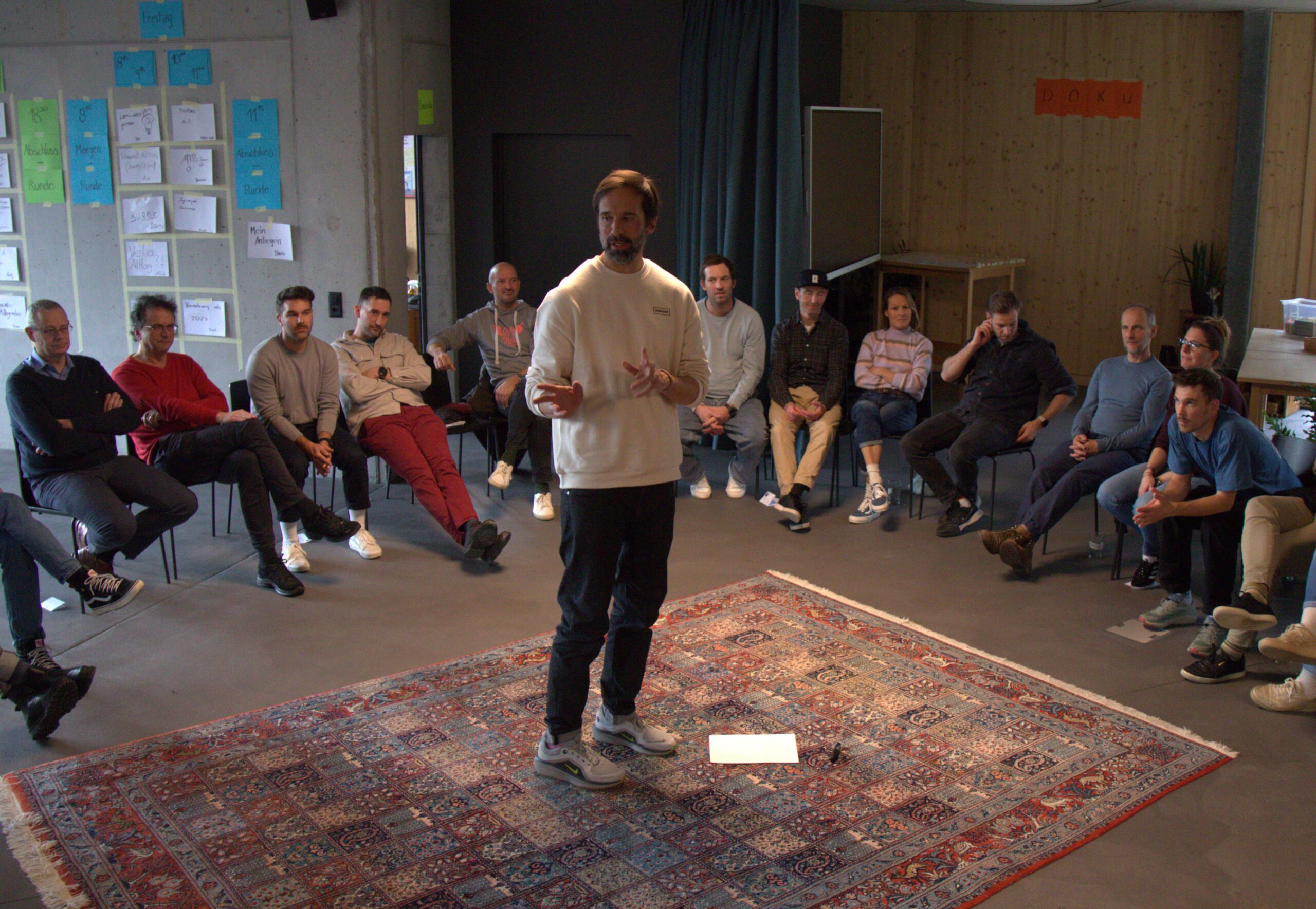
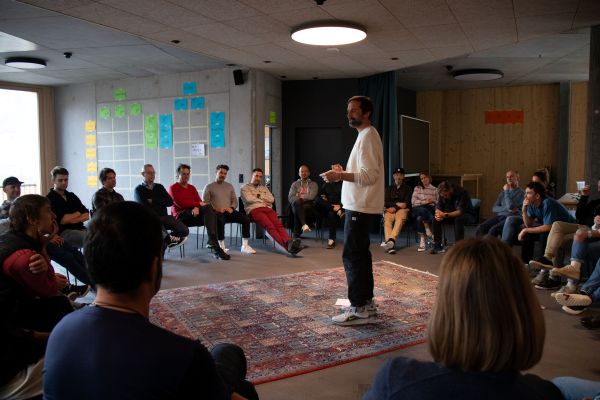
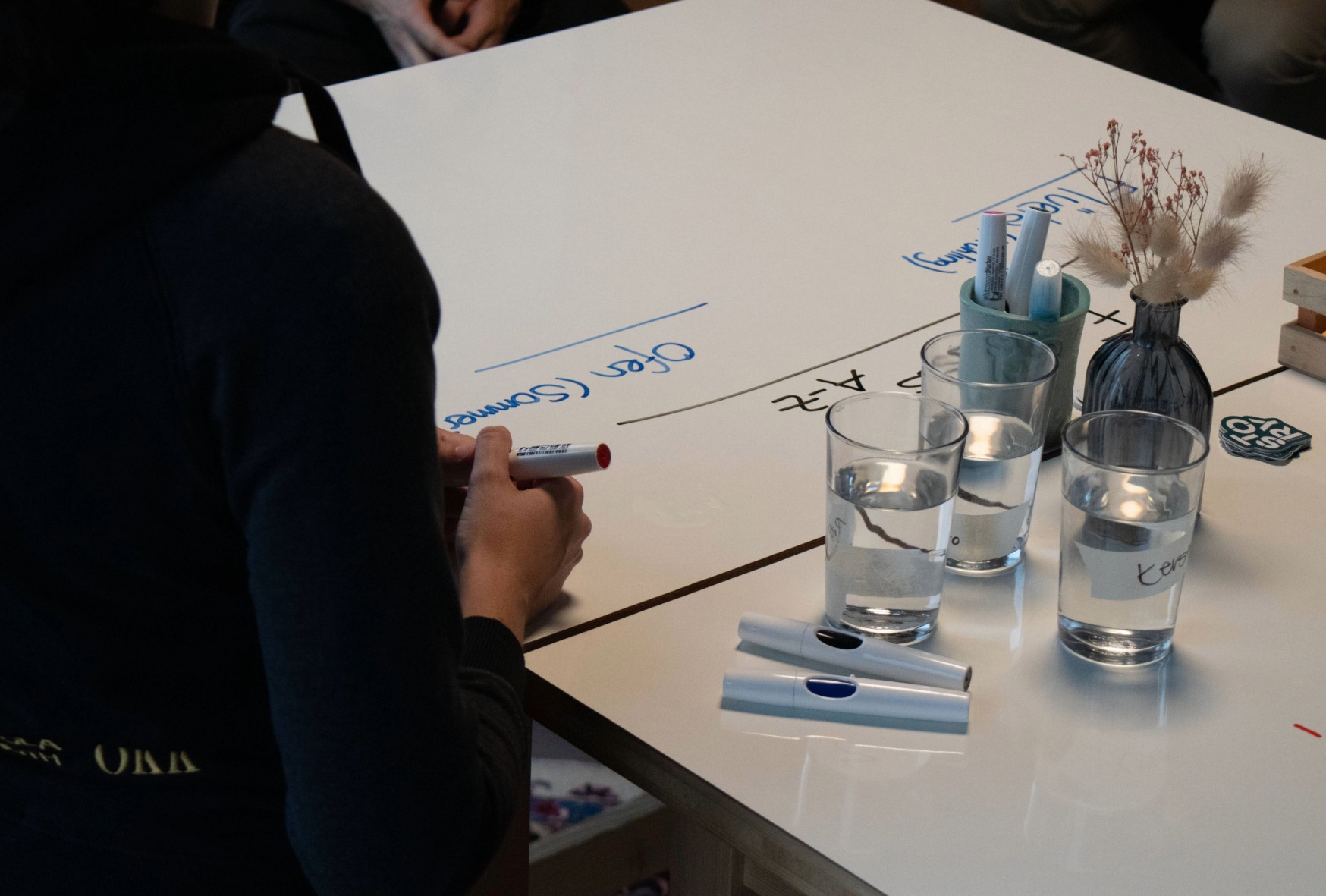
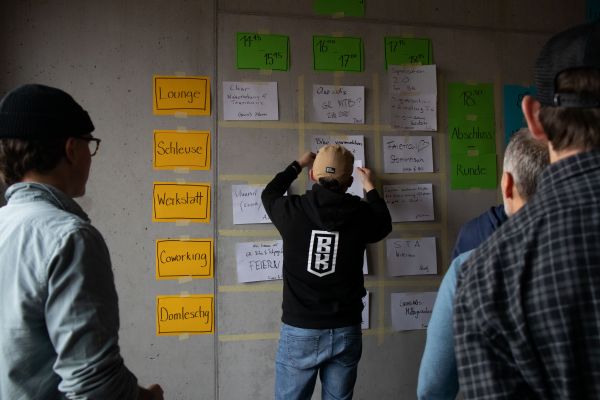
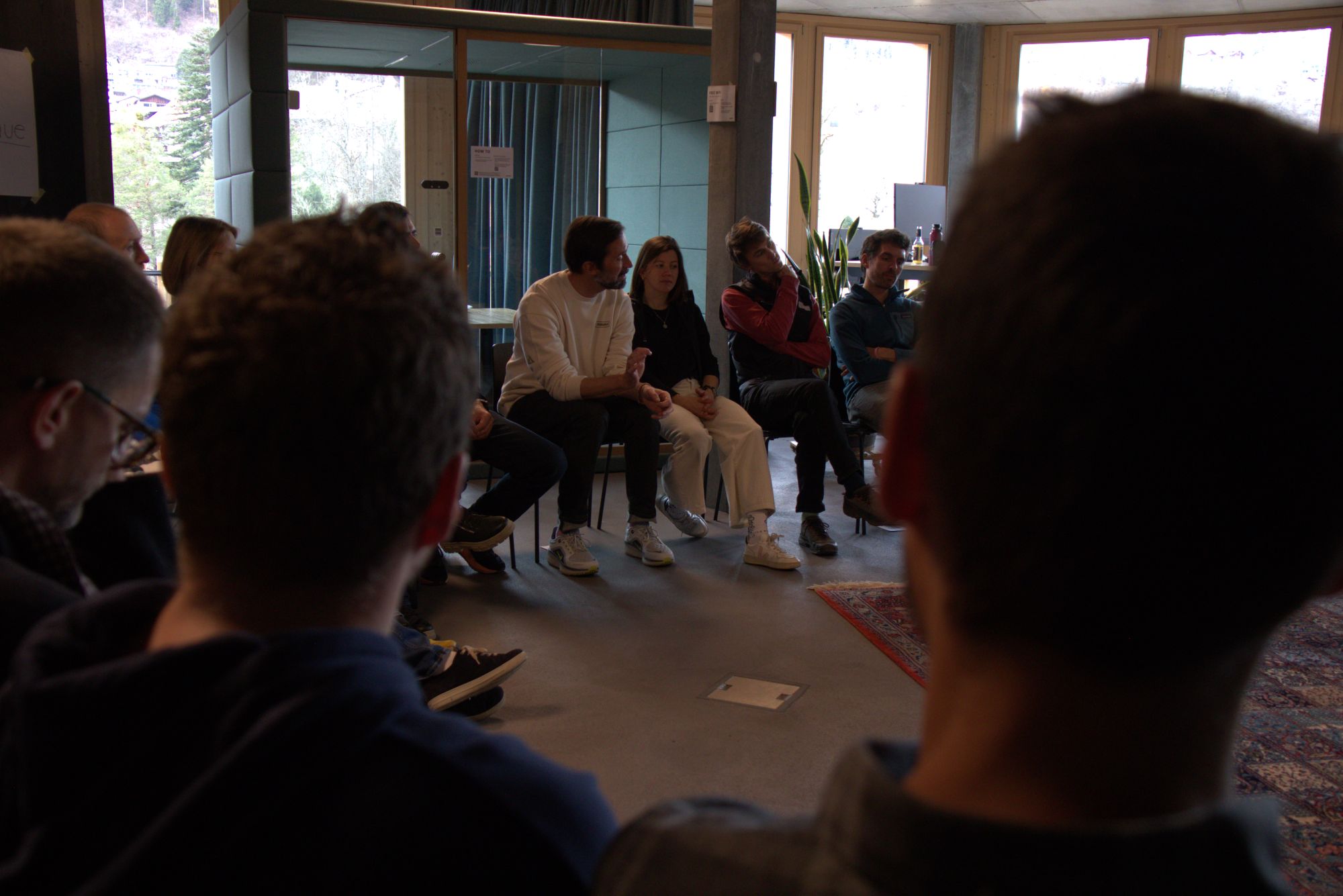
Open Space is primarily a method for conferences and meetings. Crucially, however, it's based on the underlying attitude: the trust that the offering generated by a group is precisely what that group needs. And that the expertise is present to decide how large or small the next steps can be.
That's why Open Space, as an approach within the supporting program of Graubünden Bike, is more crucial than the annual conference. It's about finding boundaries that are both tolerable and supportive. Those given complete freedom lose themselves. Those who are given too restrictive a framework drop out. The art lies in setting the framework in such a way that people, with their own unique stories, can find a place within it.
What has surprised you most about the project over the last three years?
Two things. First, the speed: how quickly things are actually implemented based on OKR workshops and open space processes. I hadn't expected that. Second, the sheer volume: we're now in the final year of the project and have launched and implemented 40, soon to be 41 or 42, sub-projects to date – with concrete results. This momentum has not only positively surprised me, it's simply overwhelming.
What vision personally drives you when you think about the future of Graubünden Bike?
I think of the people. Of the many different people who shape things, who collaborate, who exchange ideas and develop this offering in its various facets – at a pace that suits Graubünden. When I think of these people and their work, it still fills me with great optimism.
Do you want to fully exploit the potential of your destination? We accompany you – from the development of a suitable strategy to its implementation on site, for example in the construction of new trails.