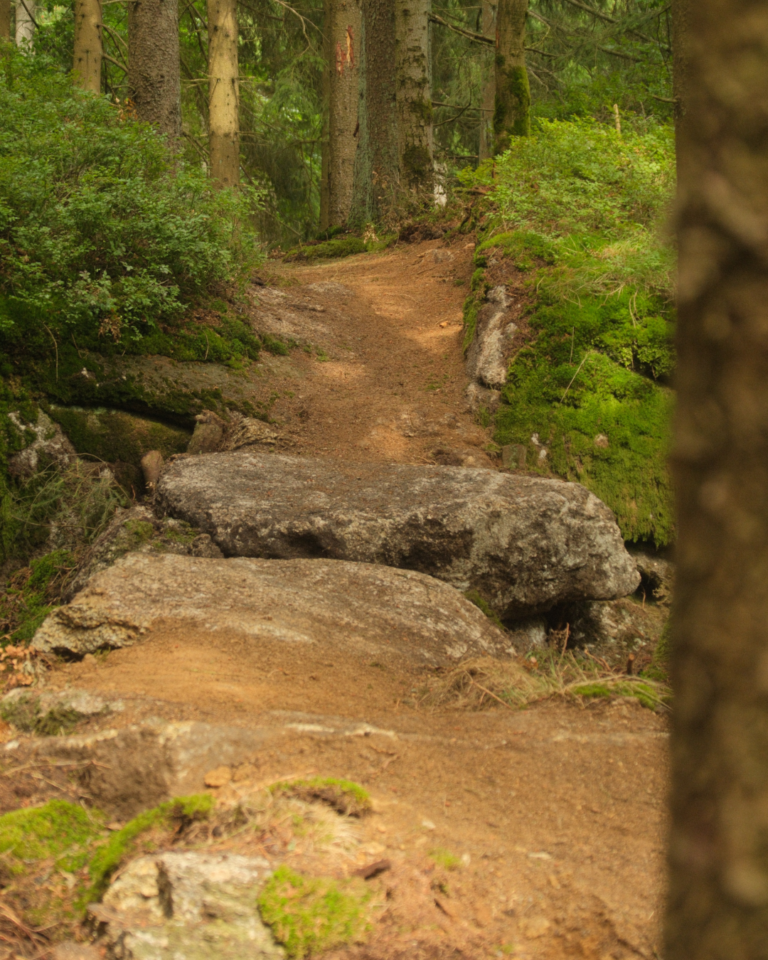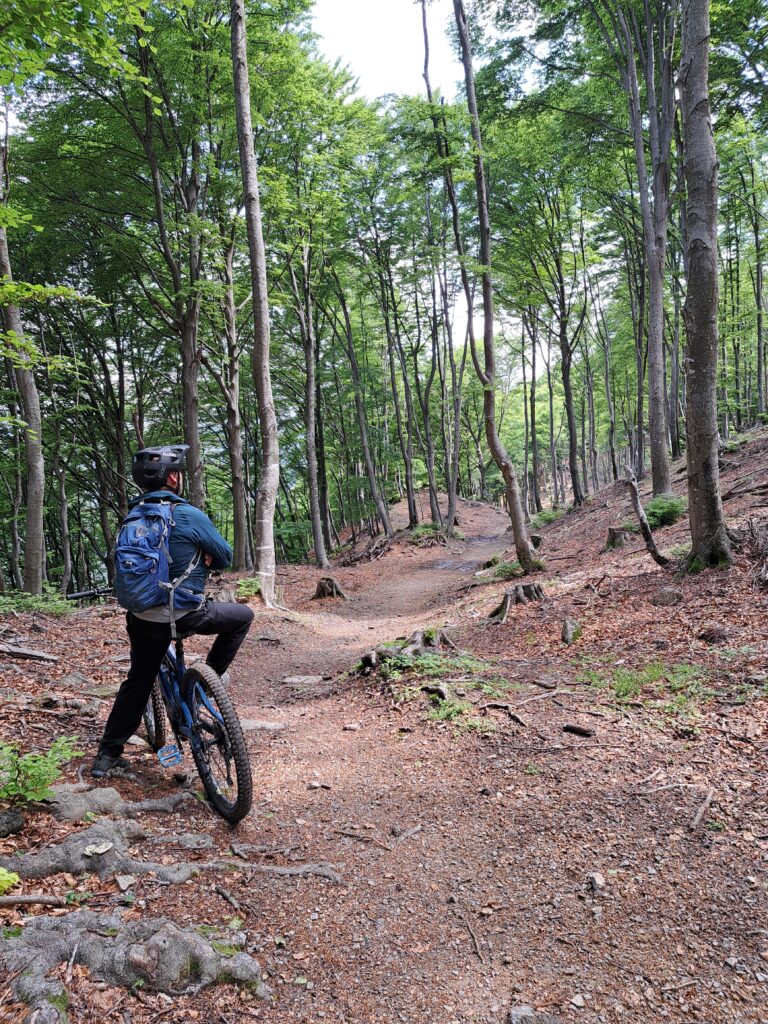
A randomly chosen mountain bike trail starts out very smooth, but then gets narrower and narrower until you have to get off your bike regularly and then at some point, pushing your bike through the undergrowth on the rear wheel, you ask yourself: mountain bike trail or wild boar trail? Anyone who has ever been biking in Tuscany, except for Ernesto Hutmacher of course, will probably know this oppressive feeling. At the very latest, you appreciate how good the network of trails in Switzerland or Austria is. And for mountain bikes at that! However, this comes at a price. In our experience, we want to share with you how much municipalities and tourist destinations have to pay for a mountain bike trail and what the costs depend on.
Our conceptual model for developing a mountain bike destination is based on three basic elements : trails, services and identity . Tourism destinations usually consider trails to be the element that requires the most investment, and therefore causes the greatest costs.
How do these costs actually work?
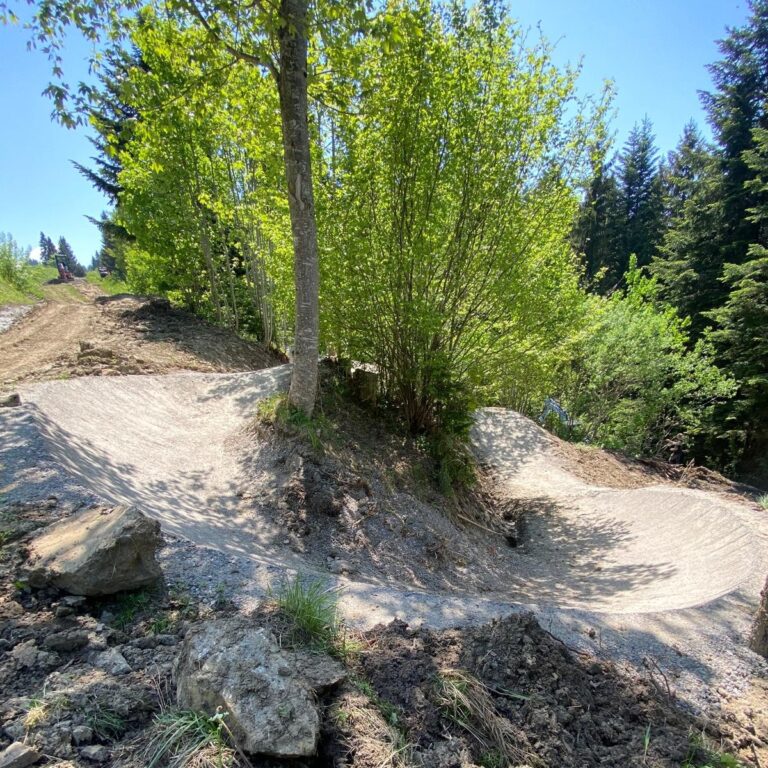
In short: The cost per linear meter is lowest when it comes to renovating an existing hiking trail to make it suitable for mountain bikers, i.e. converting it. You have to spend more if you are planning a jump trail or a downhill route with large obstacles and earth shifts. A so-called flow trail is somewhere in between in terms of price. Roughly speaking, you can say that the steeper a trail, the steeper its cost curve. And the flatter a trail, the more manageable its maintenance costs. But as I said, this only applies rudimentarily. For more precise price calculations for the initial investment, you mainly need four factors which influence the price per metre.
1) Target product
The first question is what you want: what do you want? Should there be a narrow single trail or a perfect flow trail? Do you need obstacles, do you need big steps? The price varies depending on the target product.
2) Framework conditions
Next, the general conditions must be examined: What is the legal situation, what permits are necessary? Another cost factor that should not be underestimated is the local wage and price level, which depends on the economic strength. It is certainly understandable that, for example, the same trail is more expensive in Zurich than in southern Italy.
3) topography
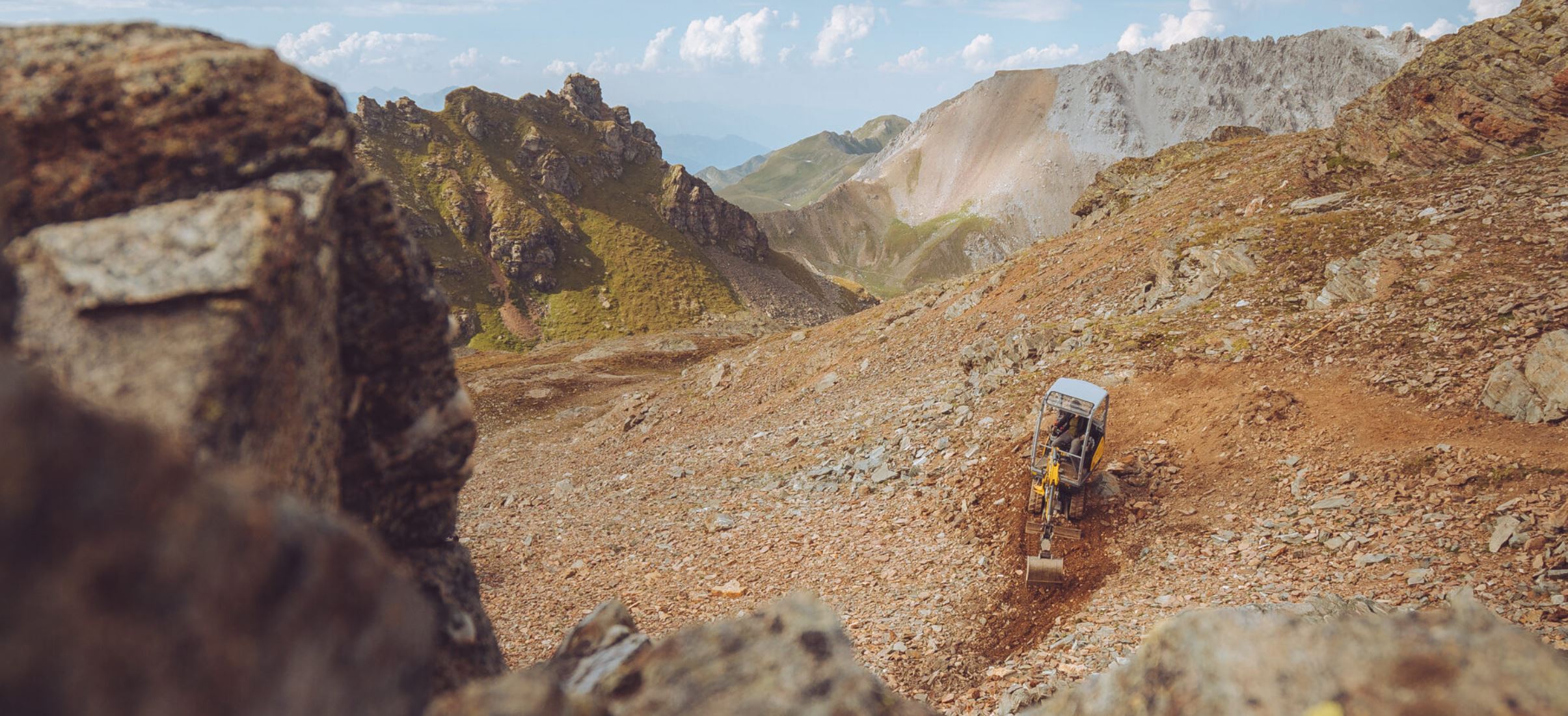
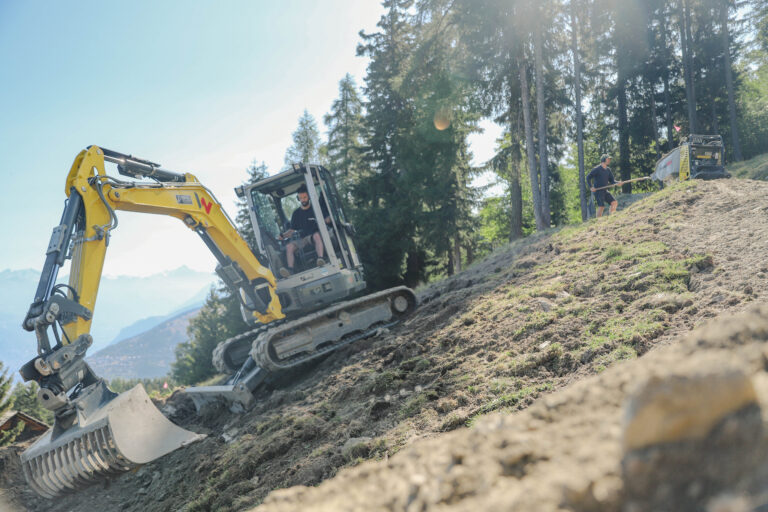
The topography has a direct influence on the question of costs: where does the trail go, how steep is the terrain and how accessible is the construction site? If, for example, the building materials have to be flown in by helicopter, that will cost a different amount than if there is an access road. Usually, the costs increase with the slope of the terrain. The steeper, the more expensive. Another important decision is whether imported materials are needed - i.e. whether materials such as earth, stones, etc. have to be brought in or whether there is already enough of them on site. And if special structures are needed, such as bridges, this costs extra. Last but not least, you should analyze whether there is more organic or mineral material on site - or a bit of both.
4) Construction quality & planning
All of the factors mentioned above are present in the vast majority of cases. However, what can be directly influenced and consciously chosen during the evaluation process is the quality of construction. The better and more detailed the planning and design are, the better the quality of the trail will be in the end. It is therefore worth investing a little more time and money in this phase of the project. Of course, the actual quality of construction, which depends on the construction company, plays an essential role. This can vary greatly from provider to provider. It is therefore worth making a careful and good choice here. Here is a good tip on how to recognize a professional trail builder: If he has a clinometer with him! If he doesn't know what that is, then you are probably dealing with the "steep cost curve" type.
Attention! It is important to remember…
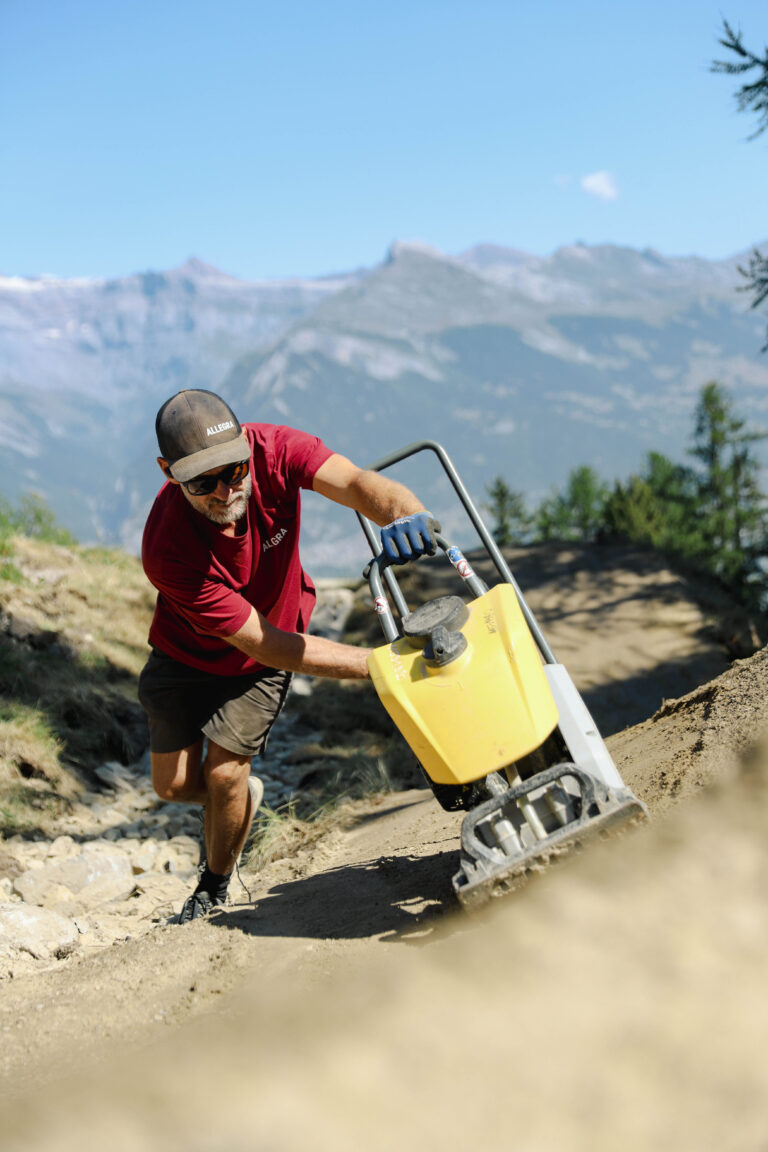
… that the costs of a trail do not only refer to the initial investment. A trail generates costs at the very beginning during construction, but also during maintenance and repair. This is what a healthy life cycle of a trail looks like. Economically, this can be represented as follows: The costs are on the Y-axis and the service life on the X-axis. At the beginning there is a section where our I0 is the initial investment. Starting from the highest point, a rising curve emerges and this shows the maintenance costs over time. If you really take the trouble to represent this graphically and calculate it, you will come to the conclusion that it is not so important whether the initial investment is 100,000 or 120,000 francs. What is much more important is how steep the maintenance cost curve is. We know of cases in which the maintenance costs are up to 25 percent of the initial investment. If you compare this with maintenance costs of 7 to 8 percent, then this results in a factor of 3 to 4!
To put it simply: a trail with low maintenance costs will be profitable sooner.
Last but not least…
Finally, what we would like to give as the most valuable advice in the truest sense of the word: A trail always has a limited lifespan and this depends heavily on the quality of the construction. If you want to build cost-consciously, you do so sustainably. And this means investing a little more money at the beginning for good construction quality in order to keep the follow-up costs low and under control. If you build euphorically cheaply, you may be unpleasantly surprised by steeply increasing follow-up costs for trail maintenance. It would be a shame if a newly renovated hiking trail disappeared from the scene again like this.