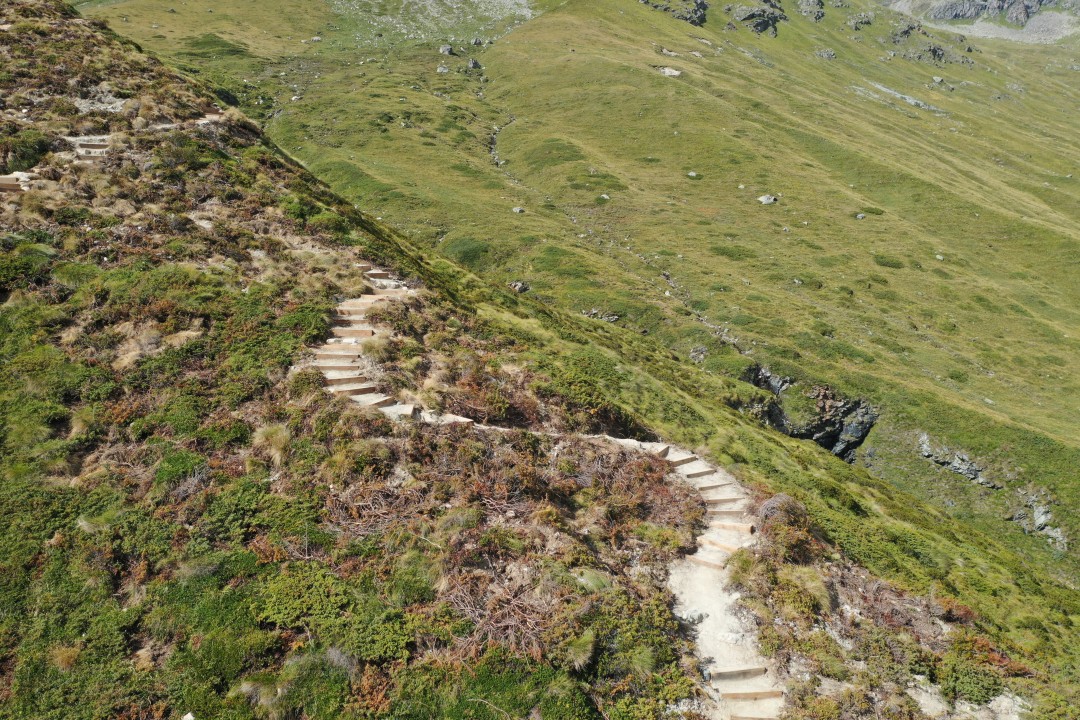
Steps and stairs: indispensable elements in path construction

Steps and stairs in path construction: The right choice for sustainable erosion control and path maintenance. Find out why material selection and planning are crucial.

Written BY

Steps and stairs: indispensable elements in path construction

The decision for or against steps on trails depends largely on the respective user group. While steps on hiking trails are a solid solution for reducing and controlling erosion, they are less popular on mountain bike trails. From the user's point of view, it is more pleasant on mountain bike trails to reinforce areas at risk of erosion without building steps, but rather by means of stone reinforcement. Building steps to reduce erosion is particularly useful when maintaining hiking trails. For completely new hiking trails, the route should be planned in such a way that steps can be avoided as far as possible, depending on the available corridor.

The importance of steps in road construction

Steps and stairs are more than just functional elements; they play a critical role in erosion control and the long-term maintenance of trails. On steep and/or eroding trail sections, they prevent soil loss, enable clear routing and provide safe and durable paths for all users.
Selection of material: a key question

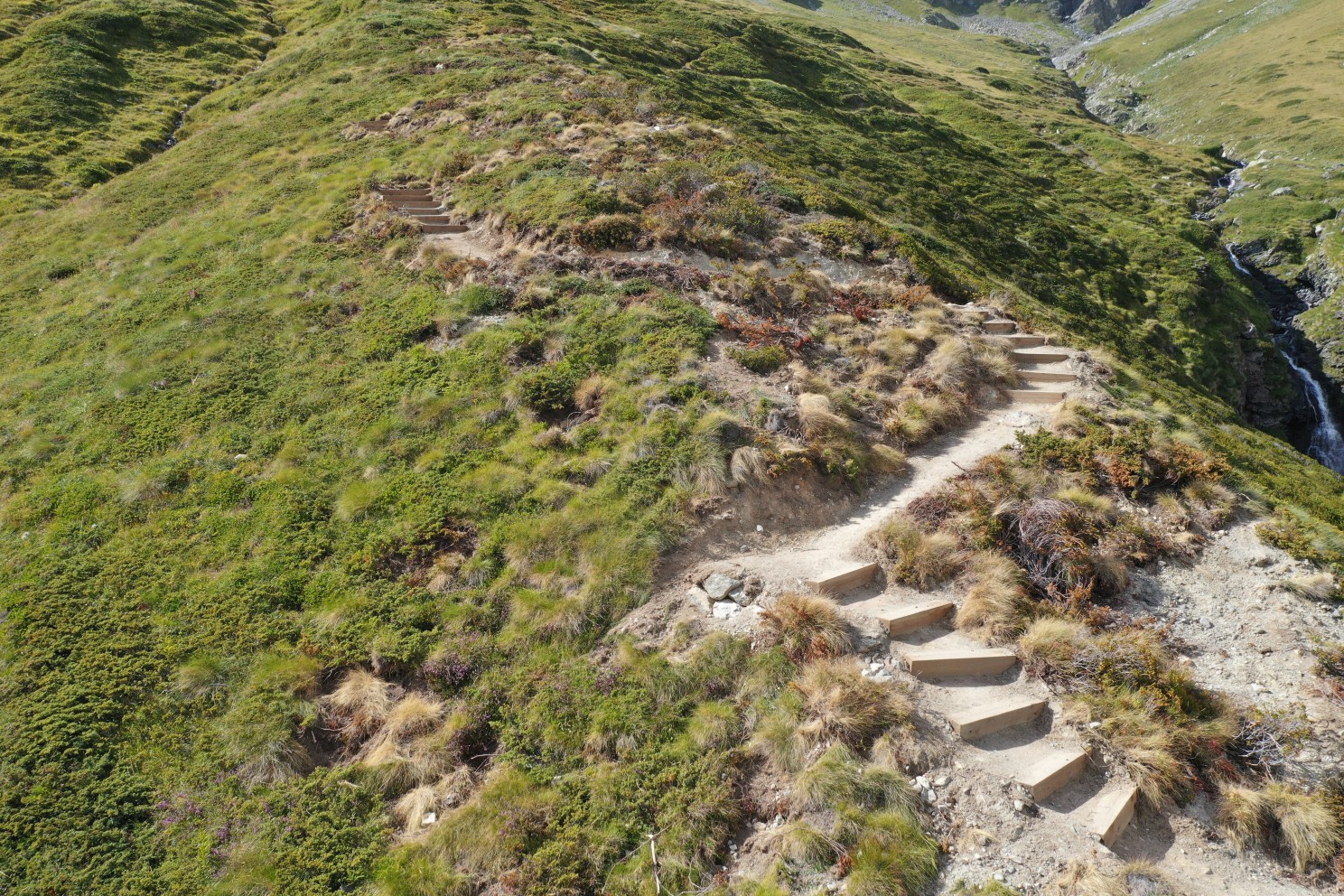
The decision between wood and stone for building steps depends on several factors: How many steps are needed? Are enough stones available near the path? Can stones be easily transported to the construction site? Is durable wood available locally?

In general, stone is preferable to wood if it is locally available in sufficient quantities. Stone steps are the most durable solution when installed correctly, as they have no expiration date. Wooden steps will need to be replaced sooner or later, depending on the type of wood. When building new wooden steps, it is recommended to use durable types of wood such as larch, which offers good durability at a reasonable price. Other types of wood can also be durable. The source should always be as local as possible.

Sometimes steps can be made from a combination of stone and wood, especially in rough terrain where there is not enough stone available and no supply is possible via the existing trail network. In this case, the use of a helicopter can be useful. Transporting wood by helicopter is more cost-effective than transporting stone. However, for the reinforcement of heavily used mountain bike trails, it can still be useful to bring in stone. Although this may seem expensive at first, depending on the situation, it can control erosion and ensure the long-term preservation of the trail. After the one-time investment, the ongoing maintenance costs for this area are minimized in the long term.

If you need support in maintaining hiking and biking trails, we are happy to share our experience and provide non-binding advice. Contact us by email if necessary: lukas@helloallegra.com
MORE OF ALLEGRA

Moving away from winter dependency – towards year-round tourism: Alpine tourism is at a turning point. 

Moving away from winter dependency and towards year-round tourism: Alpine tourism is facing a fundamental transformation. Climate change and new guest expectations demand a rethink. Strategies like the "Snow Compass" show concrete ways in which destinations can secure their future. Mountain biking tourism, in particular, is developing into a key growth driver with high added value and great potential for the summer and shoulder seasons.

Mountain bike concept Canton Thurgau

Taking into account the legal requirements and interests of nature and landscape conservation, the mountain bike concept for the Canton of Thurgau is intended to meet the needs of all interest groups.

Trails2School: When the journey to school becomes an adventure

Trails2School transforms the last few meters before school with simple trail elements – for more fun, more exercise, and more children on bikes. Pilot communities in the canton of Graubünden are being sought.

Planning and construction – Red Enduro Tech Trail: Tché Don in the Moléson Bike Park

The Tché Don in the Moléson bike park is a natural trail that offers technical sophistication and a true enduro feeling – direct and demanding.

The film: «ALLEGRA – Building Trails and Connecting Worlds in Japan»

Our film goes online on April 30th! Join ALLEGRA on an inspiring journey – from its origins in Switzerland to the development of a new mountain bike culture in Japan.

Construction – Green Style Trail: Foppa Trail in Flims Laax

A green flow trail with gentle waves, flat curves and a playful channel, offering beginners and families a smooth, controlled riding experience.

Trail maintenance courses with ALLEGRA: Maintaining trails instead of just building them

Trail construction doesn't end with the final shaping day—that's when the trail really begins to liven up. But even decades-old trails need regular maintenance. In our trail maintenance courses with Graubünden Bike, Lukas Häusler and the ALLEGRA team impart practical knowledge on sustainable trail maintenance—from alpine enduro trails and skill centers to hiking trails. Learn more and register now!

Planning and construction – Red Tech Trail with style elements: Bassa di Cardada in Ascona-Locarno

The Bassa di Cardada combines technical skill, active line choice and creative driving style - above Lake Maggiore.

Fairtrail Graubünden and its impact

Fairtrail Graubünden summarizes its project duration and impact. One thing is clear: the coexistence project truly promotes respectful coexistence between bikers and hikers on the slow-traffic routes of the Graubünden mountains.

Miniparks, our set solutions for small areas

Miniparks are the space-saving (urban) set solution for more movement & skills on the bike.

Do you actually know

...what's really going on on your trails, hiking or cycling paths?

We use state-of-the-art technology to take (hybrid) frequency monitoring in alpine and urban areas to the next level!