The days when a region could blindly hope for the next snowfall are over. For one tourist destination in Austria, a very concrete, existential question loomed:
Can a professional mountain bike business be economically viable enough to represent a genuine alternative to the winter business?
To answer that reliably, it's not enough to simply draw a few trails in the forest. What's needed is a master plan that is commercially sound and socially embedded. And this is where ALLEGRA Austria comes into play.
How we proceeded: From the basics to the concept
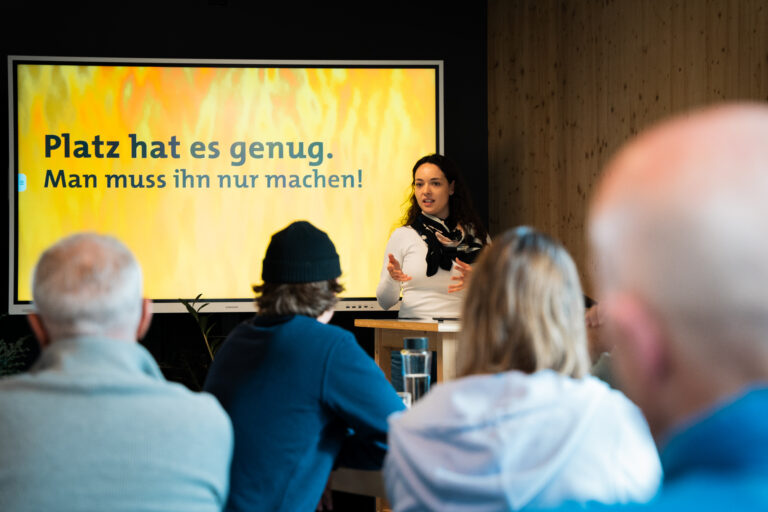
We didn't develop the project at a desk, but rather sought dialogue. Through deep Audits We analyzed the current situation on site. In a comprehensive Stakeholder process and targeted Workshops We brought together mountain railways, the tourism association, landowners, and the administration. The goal was to dismantle scarcity thinking and old conflicts, and instead create a shared understanding of the economic opportunities.
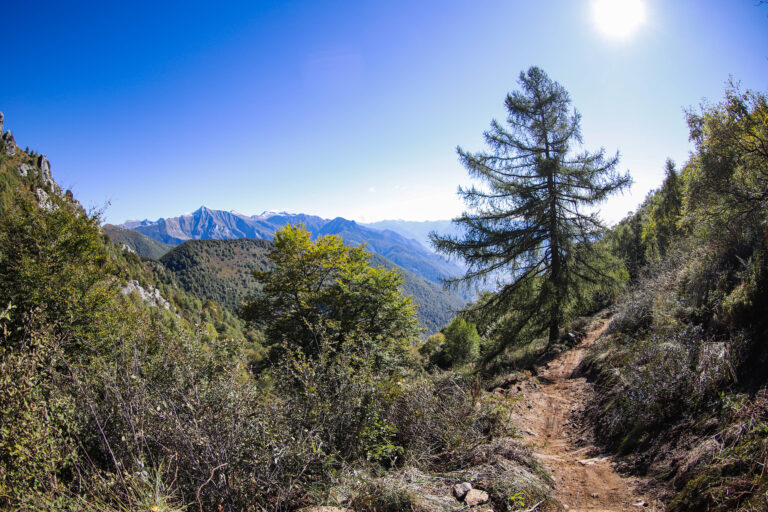
Of course, a detailed on-site analysis is also part of the process: We examined the destination and the terrain to find out what is available and what is lacking. How does the destination position itself, and what needs to be done, when, and where?.
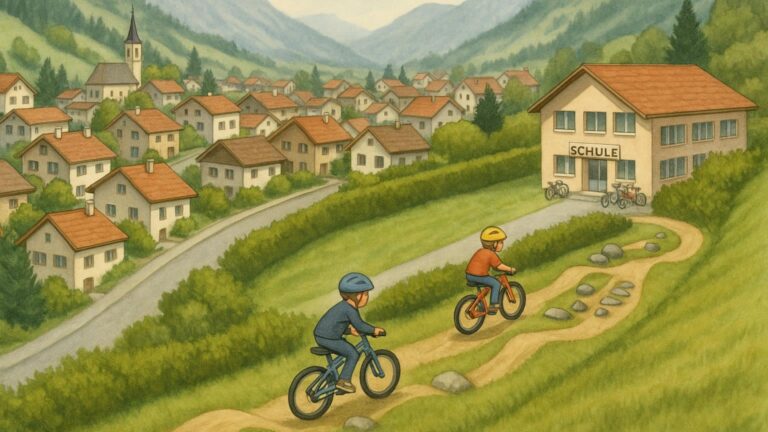
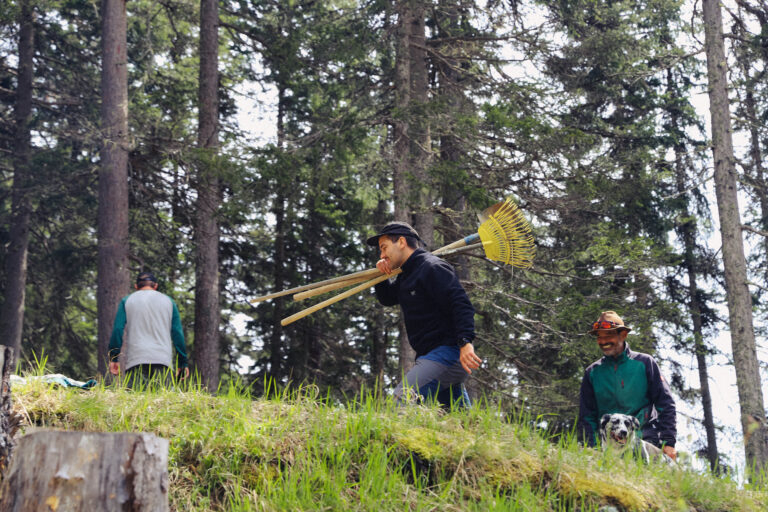
Particularly impressive for project managers Dominik Bösch: The locals in this destination are incredibly passionate about biking and actively promote it. And the work they do with children and young people is unbelievably excellent – all on a volunteer basis. It's a fantastic foundation for building a sense of identity!
The results: A concrete roadmap
This intensive process has resulted in a master plan that provides the region with a clear tool for the coming years.
Key findings at a glance:
- Precise target group definition:
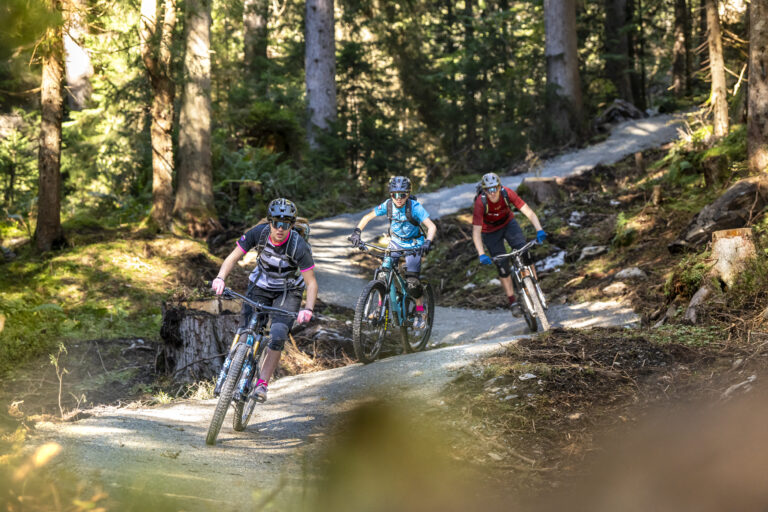
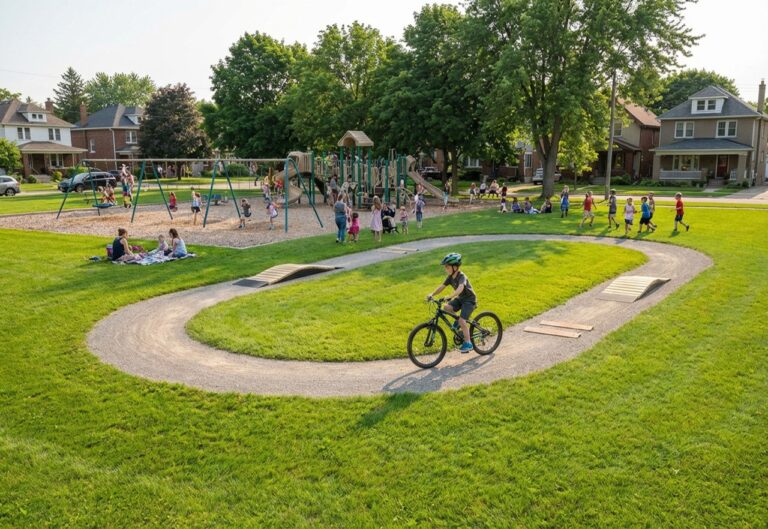
We have precisely defined for whom we are building – and in doing so, we have consciously focused on the locals The focus has shifted. Sustainable infrastructure must first and foremost serve the local population (and youth) in order to be authentic and proudly embraced by the locals. - Conceptual map:
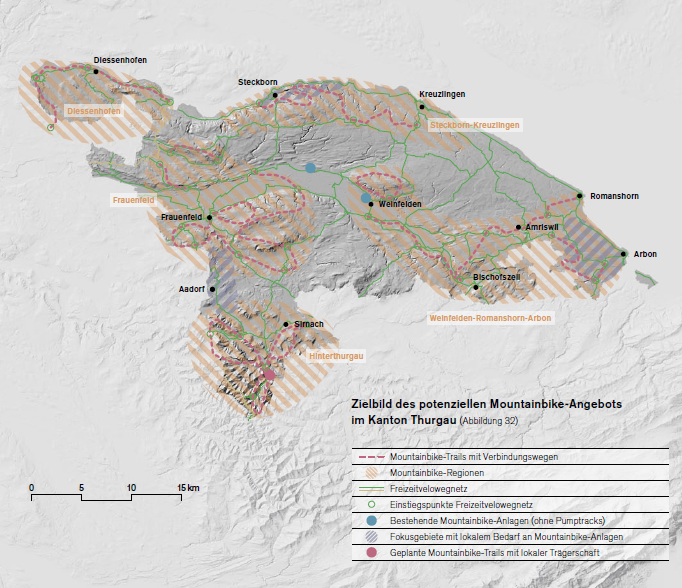
Here we have developed a spatial vision that dictates where each type of facility should be located. This enables smart management of cyclists and resolves conflict zones between hikers, forestry, and cyclists. The map also serves as the basis for discussions with landowners. Only after these discussions do the management and economic viability measures take effect. - Economic and potential analysis:
The financial test for the "winter question." We developed a conservative, business-oriented model that compares the necessary investment costs with the regional revenue potential. The result clearly shows: If structured correctly, the bike park is a highly profitable revenue generator for the entire valley. However, it makes sense not to consider this in isolation from other summer products. - Clear list of measures:
To avoid getting stuck in theory, we have developed a binding catalog. It is divided into four essential areas of action:- Foundational work: Permits, lease agreements and operating models.
- Infrastructure: Construction and opening of trails, paths and access roads.
- Services: Development of rental stations, bike schools and catering concepts.
- Identity: Community building, local marketing and the creation of a genuine local bike culture.
Ask Dominik
The tourism expert is exactly the right person to talk about a mountain bike master plan in your destination in Austria.